
One warehouse is a single point of failure. We run two.
Duplicate 20–30% of your best-selling SKUs at our second facility across Kyiv. Storage 975 UAH ≈ $24 per m³/month, minimum bill 10,000 UAH ≈ $250/mo, a live backup stream from 2 days. Four war years, 0 days of downtime — audited by missiles, not consultants.
✓ Reply within 15 minutes · contract in 1 day · no obligations
Or message us on Telegram →Western 3PLs plan for hurricanes. We have been live through four years of missile war.
July 2, 2026. One night of massed strikes on Kyiv burned through a parcel carrier's logistics terminal, an electronics retailer's warehouse and office, a publisher's fresh print run of 800+ books, and a wine merchant's stock. Four businesses woke up to the same problem: everything they sold had been sitting at one address. Dates and sources are in the table below — no names next to sales copy, that's our rule.
After nights like that, our phone takes up to 10 inquiries a day. Almost every call opens with the same sentence: "We need a second warehouse. How fast can you take stock?"
This page is the long answer. The short one: from 2 days, from roughly $250 a month — and no, nobody in Ukraine can guarantee your pallets against a direct hit. Anyone who promises that is selling a feeling, not a service. What a second warehouse actually buys is different: it turns "the business is down" into "one site is down, orders keep shipping."
Every large western 3PL publishes a business-continuity page. Read one — it talks about hurricanes, port strikes and Black Friday overload. Reasonable risks, planned on paper. Our continuity stack sat a harder exam: four years of long-range strikes, the blackout winter of 2022–2023, carrier hubs burning within 20 km of our gates. Through all of it: 0 days of operational downtime, 2.6 million parcels shipped. That is what war-resilient fulfillment in Ukraine means in practice — not bunkers and bravado, but a second independent node and boring redundancy at every layer beneath your orders.
Force majeure happening right now?
If your warehouse was hit, flooded or sealed off behind a cordon this morning — skip the reading. Call or message; within one conversation you will know whether we can take your stock this week. No form here. Forms are for planning weeks — you are having an emergency.
Strikes on warehouse logistics in Ukraine, 2024–2026 — dates and sources
No fear marketing. These are public facts with links to the coverage. The companies below did nothing wrong — several run security budgets we can only respect. The exposure was never competence. It was concentration: one address holding everything.
| Date | What happened | Source |
|---|---|---|
| Jul 2, 2026 | Massed attack on Kyiv: Nova Poshta logistics hub in Obolon destroyed; MOYO warehouse and office hit; 800+ books of a BookChef print run burned; OKWINE warehouse destroyed. | focus.ua, epravda.com.ua |
| Jan 13, 2026 | Strike on the Nova Poshta terminal in Korotych, Kharkiv region — the same terminal was destroyed in 2023 and rebuilt. About 3,000 parcels burned. | novaposhta.ua |
| 2025 totals | Nova Poshta's own year count for 2025: 69 branches damaged, 12 destroyed, 5 sorting hubs destroyed completely. | epravda.com.ua |
| H1 2026 | 25+ attacks on warehouse infrastructure in six months. Since 2022, roughly 20% of Ukraine's warehouse stock (~400,000 m²) destroyed. War risks not reinsured since July 2022. | rbc.ua |
| May 1, 2024 | Strike on the Nova Poshta depot in Odesa: 904 shipments destroyed, roughly 3 million UAH in customer goods. | slovoidilo.ua |
A pattern worth noticing: the Korotych terminal was hit, rebuilt, then hit again. Rebuilding a site does not retire the risk of the site. Only a second address does.
Four layers between a missile and your revenue — each with an honest "doesn't cover"
Uptime through a war is not one heroic feature. It is a stack, and every layer covers a specific failure — and honestly does not cover another. Here is ours, bottom to top.
Three industrial generators, 350 kVA combined
- Grid blackouts of any length — WMS, scanners, conveyors and lighting keep running.
- The 2022–2023 blackout winter: our dispatch lines shipped on schedule through rolling outages.
- Strike-week grid instability — generators pick up in minutes, no cold starts.
- A hit on the building itself. A generator restores power, not walls.
- Your carrier's blackout — if a sorting hub goes dark, parcels wait there, not with us.
Starlink plus two independent fiber providers
- Any single ISP failure — two independent fiber lines with automatic failover.
- District-wide outages — Starlink keeps the WMS syncing when the whole area is dark.
- Channel sync: stock levels update across sales channels in 800 ms, so overselling does not creep in during chaos.
- Your storefront going down. If a marketplace or your site is offline, no warehouse can ship an order that was never placed.
Two facilities on opposite sides of Kyiv
- Single-site physical loss — fire, strike, blocked access. One site down, the other keeps dispatching.
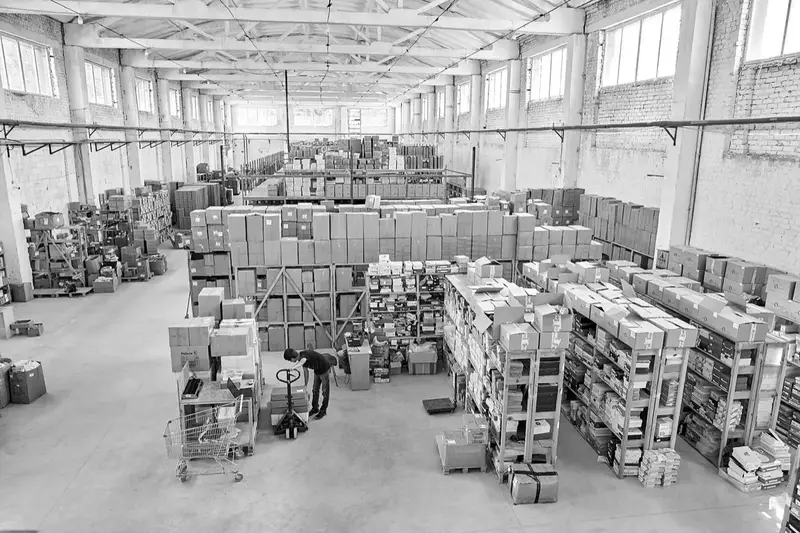
- Shchaslyve, Boryspil district (east, 2,700 m²) and Bilohorodka (west, 1,000 m²): about 45 km apart, different grid branches, different roads, separate teams.
- Either site can run your stream alone — same WMS, same processes, same barcode discipline.
- A region-scale event hitting both sides of Kyiv at once. Two sites in one oblast is regional redundancy, not geographic arbitrage — more on that honesty below.
Stock split 20–30% and switchover from 2 days
- Revenue continuity: your best sellers ship from the surviving stock while you deal with the damage.
- Fast rerouting — orders point at whichever site is live. Setup from 2 days at onboarding; hours once you are established.
- Peak overflow with the same mechanics: up to 6,000 shipments a day of combined capacity, 47 minutes from pick to the Nova Poshta terminal.
- Your full catalog. A backup stream keeps money coming in; it does not clone the whole warehouse. Slow movers stay single-sited — a deliberate trade, not an oversight.
Engineered for extreme reliability
Instant Power
Three industrial generators, 350 kVA combined — WMS, scanners, conveyors and lighting keep running through grid blackouts of any length, including the 2022–2023 blackout winter.
Dual Geography
Two facilities on opposite sides of Kyiv, about 45 km apart on different grid branches and different roads — one site down, the other keeps dispatching your top SKUs.
Total Control
Starlink plus two independent fiber lines with automatic failover; stock levels sync across sales channels in 800 ms, so overselling does not creep in during chaos.
Is it safe to store inventory in Ukraine in 2026? The honest answer.
No one selling warehouse space can honestly answer "yes." Here is what true looks like instead.
Since February 2022 roughly a fifth of Ukraine's professional warehouse stock — around 400,000 m² — has been destroyed. In the first half of 2026 alone, warehouse infrastructure took more than 25 strikes. And since July 2022 international reinsurers have refused Ukrainian war risk, which means insurance against missile damage to warehoused goods is, in practice, not a purchasable product. We do not offer it. Nobody being straight with you does.
So the useful question changes. Not "is it safe" — it is not, fully — but "is the risk engineerable?" It is. Physical risk reduction — sites away from dense target zones, duplicated power, duplicated connectivity — plus distributed stock across two addresses turns a catastrophic scenario into an operational one. Database engineers solved this argument decades ago: you do not debate whether the server can die. You make its death boring.
Our own numbers through four war years: 0 days of operational downtime, 2.6 million parcels shipped, both sites working through blackout winters and strike weeks. We keep repeating the caveat because it matters — that is a track record, not a guarantee. The next missile does not read uptime statistics. Plan while it is a planning question, not a recovery one.
And are you diversified yourselves?
Turn the question on us — you preach stock distribution, so are you distributed? Partly. And we would rather say that plainly than dress it up.
Two facilities on opposite sides of Kyiv, with separate power, separate connectivity and separate teams, cover the failure mode the 2024–2026 strike record actually shows: one building, one bad night. They do not cover "all of Kyiv region at once." If your risk model includes that scenario, you need nodes in different oblasts or different countries — and MTP's honest place in such a network is the strong second number, not the whole answer.
Some of our clients run three to five warehouses across operators and regions. We hold their Kyiv-region node and, just as important, their switchover discipline — tested routing, duplicated top SKUs, integration that does not need a heroic weekend to fail over. We would rather be one reliable layer of your plan than oversell ourselves as the plan.
How clients actually run dual-warehouse stock — three patterns, no names
We name niches, not clients — their continuity plans are their business. All three below are live setups, not composites.
A souvenir seller splits best sellers between their own site and ours. Demand is seasonal and campaign-driven: when a strike week disrupts one flow, dispatch shifts to whichever node ships that day. The catalog is wide, but the top SKUs are stable — a clean 20–30% split that rarely needs rebalancing.
A cosmetics brand keeps fresh batches at two addresses under FEFO discipline. Beauty cannot pause: marketplace rankings punish stores that stop shipping, and expiry dates punish stock that sits. Duplicated top SKUs keep both problems small when one location or one carrier hub has a bad week.
A seller of energy-efficiency goods runs about five warehouses across operators — we are one node. Their demand spikes exactly when infrastructure gets hit, so downtime in those weeks is peak revenue lost. Their playbook: no single site holds anything irreplaceable, and flows re-point in hours, not days.
The same backup earns its keep in peak season
November order spikes. Marketplace promo days. A container that arrives three weeks late and then all at once. Every ceiling your primary warehouse has, an active backup absorbs — western 3PLs sell this as peak-season overflow, usually as a separate product with separate pricing.
We run overflow with the identical mechanics as the war scenario: duplicated top SKUs, live integration, orders routed by one switch. The trigger differs. The playbook does not. Clients who set up a reserve stream for risk reasons use it every Q4 without drama — the main site fills to its dispatch ceiling, the excess routes to us.
Across both sites we hold headroom of up to 6,000 shipments a day, and on a normal day an order leaves for the Nova Poshta terminal 47 minutes after it lands in the WMS. Overflow capacity you never use is an insurance premium. Overflow you use every November is just capacity you bought early — one bill, two jobs.
Faster than a form: message the founder
Send one message with your two numbers — SKUs and orders per month — and you get a real answer, not an email sequence.
Message @nikolay_mtp on Telegram →The message is pre-filled — replace ~N with your figures. Mykola answers personally, Kyiv time.
From signature to a live backup stream — the 2-day path
- Hour 0–1: contract. Standard service agreement, signed electronically. About an hour if your side can approve the same day. No entity registration, no deposits, cancellation with 14 days' notice.
- Hour 1–2: integration. We connect your store, ERP or marketplace feed to our WMS. If you run test orders with us the same day, the hookup takes about an hour — stock then syncs across channels in 800 ms.
- Day 1–2: first inbound. You ship 20–30% of your best-selling SKUs. Receiving speed depends on batch size and labeling quality: a pallet of well-labeled cartons goes onto racks the same day, a mixed container takes longer.
- Day 2 and on: the stream is live. Orders route to whichever warehouse you point them at — permanently split, or flipped in an emergency. From here, a switchover is a routing decision, not a project.
The honest print: "from 2 days" assumes your active participation — someone approving the contract, running test orders, dispatching the first truck. Volume matters too: 50 SKUs land in a day, 5,000 take longer. We will not promise 24 hours. People who promise 24 hours have not unloaded many trucks.
What a plan B costs — real rates, no "contact us for pricing"
Published tariffs, same as any primary client. The minimum bill is the honest headline number: for a typical 20–30% split of top SKUs, it is what you will actually pay most months.
| Operation | Rate (UAH) | ≈ USD |
|---|---|---|
| Storage, per m³ per month | 975 UAH | ~$24 |
| Pick, pack and dispatch, per order | from 30 UAH | ~$0.73 |
| Minimum monthly bill | 10,000 UAH | ~$250 |
Think of the minimum bill as the premium on a policy that no longer exists. Since reinsurers pulled out of Ukrainian war risk in July 2022, a duplicated pallet is the only coverage money can still buy — and unlike a policy, it also ships orders. Receiving of inbound batches is quoted per delivery, by pallet count and labeling state; full rates for storage and assembly sit on our pricing page, and the cost calculator turns your SKU count and order volume into a monthly figure in about two minutes.
The filter works both ways, deliberately. If ~$250 a month reads as expensive next to the value of your stock, a backup warehouse is not your bottleneck yet. If it reads as cheap — it is, and the table above is the whole price list. No setup fee, no integration fee, no "premium resilience tier."
Questions brands ask before splitting stock
Is it safe to store inventory in Ukraine in 2026?
Honestly: nobody can guarantee safety against a direct hit, and we won't. Since 2022 roughly 20% of Ukraine's professional warehouse stock (~400,000 m²) has been destroyed, and war risks on warehouses are effectively uninsurable — reinsurers stopped covering them in July 2022. What works is risk engineering: two facilities on opposite sides of Kyiv, 3 generators (350 kVA), Starlink plus two fiber lines, and 20–30% of best-selling stock duplicated. Our record through four war years: 0 days of downtime, 2.6 million parcels. A record, not a promise.
What happens if my 3PL warehouse in Ukraine is destroyed?
With one warehouse, sales stop the same morning: stock is gone or sealed off behind a cordon, re-ordering takes weeks, and marketplaces derank listings that stop shipping. With 20–30% of top SKUs duplicated at a second site, orders reroute to the surviving stock the same day — your best sellers keep shipping while you handle claims and re-supply. That is the difference between a bad week and a dead quarter.
How fast can a backup fulfillment stream go live?
From 2 days, if you take an active part: contract ~1 hour, integration ~1 hour (when you run test orders the same day), first inbound from 1 day depending on batch size and labeling. We deliberately do not promise 24 hours — receiving and putaway of a real batch takes real time.
How much stock should I move to a backup warehouse?
20–30% of best-selling SKUs is the working default. In most catalogs the top slice of SKUs carries most of the revenue, so duplicating just those keeps money coming in during an outage without doubling your storage bill. Slow movers stay single-sited — a deliberate trade. We help pick the list from your sales data during onboarding.
What does a backup fulfillment warehouse in Ukraine cost?
Storage 975 UAH per m³ a month (~$24), pick and dispatch from 30 UAH per order (~$0.73), minimum monthly bill 10,000 UAH (~$250). For a typical 20–30% split the minimum bill is the real number most months. A duplicated pallet is the only war-risk coverage still purchasable in Ukraine — priced like a subscription, not like a loss.
Can the same setup handle peak-season overflow, not just emergencies?
Yes — same mechanics, different trigger. When your primary warehouse hits its dispatch ceiling in November, orders route to the duplicated stock at our site. Clients who built a backup stream for war risk use it every Q4 as overflow. Across both sites we hold headroom of up to 6,000 shipments a day, with 47 minutes from pick to the Nova Poshta terminal on a normal day.
We are an international brand — do we need a Ukrainian legal entity?
No. International brands work through the same agency model as our B2B fulfillment Ukraine service: a contract with our Ukrainian operational partner, settlement in USD or EUR, Ukrainian compliance on our side. The backup stream plugs into that model without extra paperwork.
Related pages — pricing, mechanics, proof
War-resilient fulfillment in Ukraine — what the phrase means in practice
Strip the branding and a war-resilient fulfillment operation in Ukraine reduces to four testable claims. Power that does not depend on the grid: three industrial generators totaling 350 kVA, exercised through the blackout winter of 2022–2023, not parked as decoration. Connectivity that does not depend on one cable: Starlink plus two independent fiber providers, with stock levels syncing across sales channels in 800 ms. Sites that do not share fate: Shchaslyve (2,700 m², east of Kyiv, Boryspil district) and Bilohorodka (1,000 m², west of Kyiv), about 45 km apart on different grid branches and different roads. And a process that assumes failure: 20–30% of best-selling SKUs duplicated, orders re-pointable in hours, a new backup stream live from 2 days.
A backup fulfillment warehouse in Ukraine is not an exotic product. It is supply chain risk diversification applied at the address level, the same discipline international brands already apply to suppliers and carriers — and the record above shows why the address level is where 2024–2026 risk actually landed. For sellers, dual warehouse strategy in e-commerce has a second, quieter payoff: the reserve node doubles as overflow capacity in Q4, so business continuity spending stops being a pure insurance line. Fulfillment during blackouts, dispatch during strike weeks, overflow during promo days — one setup, one bill, three jobs.
We are candid about the limits because the limits are where trust lives. Nothing on this page guarantees your goods against a direct hit — war risks on Ukrainian warehouses have been effectively uninsurable since July 2022, and a company that promises otherwise is describing its marketing, not its operations. What we can show is the track record: 0 days of operational downtime since February 2022, 2.6 million parcels shipped, two facilities that have kept receiving, picking and dispatching through every strike week Kyiv region has had. Business continuity from a 3PL in Ukraine is not a certificate. It is a habit, checked nightly.
Start where it costs nothing: run your numbers through the cost calculator, scan the published tariffs, or read how international brands structure contracts and settlement in our B2B fulfillment Ukraine guide — including its war-risk transparency section. The broader service catalog both sites run is on the services page, primary fulfillment for international sellers on fulfillment Ukraine, and the people behind the uptime numbers on the about page. Or skip the reading: the form at the top answers within 15 minutes, and the Telegram button in the middle answers even faster.
Secure your UA supply chain
Two sites, duplicated power and connectivity, a live backup stream from 2 days. Leave your number in the form below — reply within 15 minutes, contract in one day, no obligations.